Enhance Visual Communication with the 3D Tooth and Dentist Tools Collection
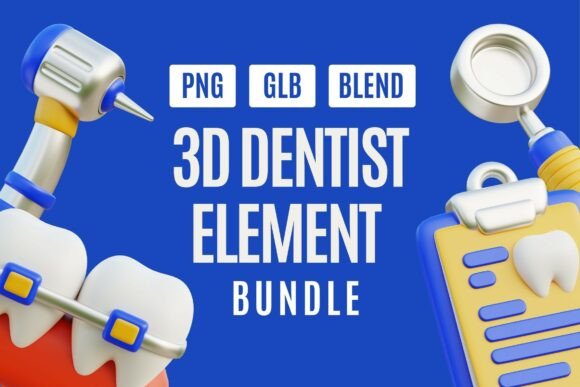
The 3D Tooth and Dentist Tools Collection offers a powerful resource for designers, educators, and professionals seeking to elevate their visual storytelling around dental care. This premium bundle includes a variety of high-quality 3D models that capture the essence of oral hygiene and dental procedures. From toothbrushes and dental tools to braces and clinic equipment, each element is meticulously crafted to ensure clarity and realism. The collection's clean blue, white, and yellow color scheme aligns with the professional aesthetic often associated with dental practices, making it an ideal choice for presentations, infographics, and educational materials.
One of the standout features of this collection is its versatility. The elements are available in multiple formats, including PNG, GLB, and BLEND, allowing users to integrate them into both static and interactive projects. This flexibility ensures that the 3D Tooth and Dentist Tools Collection can be adapted to a wide range of design needs, whether you're creating a simple infographic or a complex 3D animation for a healthcare application.
Key Features of the 3D Dentist Element Bundle
The 3D Dentist Element Bundle is designed to meet the demands of various industries, particularly those focused on health and wellness. Each model in the collection is rendered with a realistic, glossy style that enhances visual appeal while maintaining a professional look. The high-resolution files ensure that the details remain sharp and clear, even when scaled up for larger displays or printed materials.
- Comprehensive Set: The bundle includes 20 distinct 3D dental care icons and elements, covering a broad spectrum of dental tools and related items.
- Vibrant Color Palette: The use of blue, white, and yellow tones not only reflects the cleanliness associated with dental care but also creates a visually engaging experience for viewers.
- High-Resolution Files: Users can access PNG, GLB, and BLEND formats, ensuring compatibility with different design software and platforms.
- Professional Design: Each element is crafted with attention to detail, making it suitable for a wide range of applications from marketing materials to educational content.
These characteristics make the 3D Dentist Element Bundle an invaluable asset for anyone involved in creating visuals related to dental care. Whether you're a designer looking to enhance your portfolio or an educator aiming to engage students, the collection provides a robust foundation for your projects.
Applications Across Industries
The 3D Tooth and Dentist Tools Collection finds relevance in numerous sectors, particularly those that require clear and effective communication about dental health. For dentists and dental clinics, the collection can be used to create informative presentations that explain procedures and promote oral hygiene practices. By incorporating these 3D elements, professionals can engage patients more effectively, making complex concepts easier to understand through visual representation.
Medical designers and app developers can also benefit from the collection by integrating these elements into their work. The realistic and detailed nature of the models allows for the creation of interactive experiences that educate users about dental care. For instance, a mobile application focused on oral hygiene could utilize these 3D tools to demonstrate proper brushing techniques or illustrate the importance of regular dental check-ups.
Additionally, educators and content creators can leverage the 3D Dentist Element Bundle to develop engaging lesson plans and instructional materials. The ability to visualize dental anatomy and procedures can significantly enhance learning outcomes, making abstract concepts more tangible for students. This is especially beneficial in fields such as biology, health sciences, and dental education, where visual aids play a crucial role in comprehension.
Benefits of Using 3D Elements in Dental Design
Utilizing 3D elements in dental design offers several advantages that can elevate the quality and impact of visual content. One of the primary benefits is the ability to create immersive and interactive experiences. Unlike traditional 2D graphics, 3D models allow for a more dynamic presentation, enabling viewers to explore different angles and perspectives. This interactivity can lead to increased engagement and a deeper understanding of the subject matter.
Moreover, the use of 3D elements can enhance the overall aesthetic of a project. The realistic textures and lighting effects add depth and dimensionality, making the visuals more appealing and professional. This is particularly important in the context of dental care, where the appearance of materials can influence perceptions of trust and credibility. A well-designed visual can convey professionalism and expertise, which are essential qualities for dental professionals.
Another significant advantage is the flexibility that comes with using 3D models. These elements can be easily modified and customized to fit specific design requirements. Whether adjusting colors, sizes, or orientations, the adaptability of 3D models allows for greater creative freedom. This flexibility is especially valuable for designers who need to tailor their work to different platforms or audiences.
Furthermore, the integration of 3D elements can streamline the design process. With pre-rendered models readily available, designers can save time and effort that would otherwise be spent on creating assets from scratch. This efficiency not only accelerates project timelines but also allows for more focus on other aspects of the design, such as user experience and functionality.
Considerations for Effective Use
While the 3D Tooth and Dentist Tools Collection offers numerous benefits, there are several considerations to keep in mind when using these elements in your projects. First, it's essential to understand the technical requirements of the formats provided. Each file type—PNG, GLB, and BLEND—has its own set of specifications and limitations. Familiarizing yourself with these can help ensure that the elements are used effectively within your chosen software or platform.
Additionally, it's important to consider the context in which the 3D elements will be used. While the collection is designed for a variety of applications, the effectiveness of the visuals may vary depending on the audience and purpose. For example, a presentation for a general audience may require simpler and more straightforward designs, whereas a technical demonstration for professionals might benefit from more detailed and accurate representations.
Another consideration is the potential need for additional customization. While the collection provides a comprehensive set of elements, there may be instances where specific modifications are required to align with particular branding or design guidelines. In such cases, having a basic understanding of 3D modeling software can be beneficial, allowing for adjustments to be made without compromising the integrity of the original models.
Finally, it's crucial to maintain a balance between visual appeal and clarity. While the 3D elements are designed to be aesthetically pleasing, they should also serve a functional purpose. Ensuring that the visuals communicate the intended message effectively is key to achieving successful outcomes in any design project involving the 3D Tooth and Dentist Tools Collection.